If you’ve ever bitten into a French Cruller, you know it’s not just a donut—it’s an experience. Light as a cloud, crisp on the outside, and tender inside, French Crullers feel almost magical. They’re the kind of treat that makes you pause mid-bite and think, “Why don’t I make these more often?”
In this guide, we’re diving deep into everything you need to know about French Crullers—from their charm and texture to a foolproof homemade recipe that keeps the exact same ingredients and instructions you provided. Whether you’re a weekend baker or just craving something special with your coffee, this article has you covered.
Introduction: Why French Crullers Are So Special
French Crullers aren’t loud or flashy. They don’t rely on heavy toppings or fillings. Instead, they win hearts quietly—with texture. Imagine biting into something that feels like a cross between a donut and a puff pastry, almost like eating a sweet, fried cloud. That’s the magic of French Crullers.
What makes them different? It’s all about the dough. French Crullers are made from choux pastry, the same dough used for éclairs and cream puffs. When fried, that dough creates a hollow, airy interior that’s impossible to resist.
Table of Contents
| Sr# | Headings |
|---|---|
| 1 | What Are French Crullers |
| 2 | The Origin of French Crullers |
| 3 | Why This Recipe Works |
| 4 | Ingredients Breakdown |
| 5 | Preparation Time, Cook Time, and Servings |
| 6 | Essential Tools You’ll Need |
| 7 | Step-by-Step Directions |
| 8 | Frying Tips for Perfect Texture |
| 9 | The Glaze: Simple but Powerful |
| 10 | Texture, Taste, and Appearance |
| 11 | Common Mistakes to Avoid |
| 12 | Serving Suggestions |
| 13 | Storage and Freshness Tips |
| 14 | French Crullers vs Regular Donuts |
| 15 | Why Homemade French Crullers Are Worth It |
What Are French Crullers
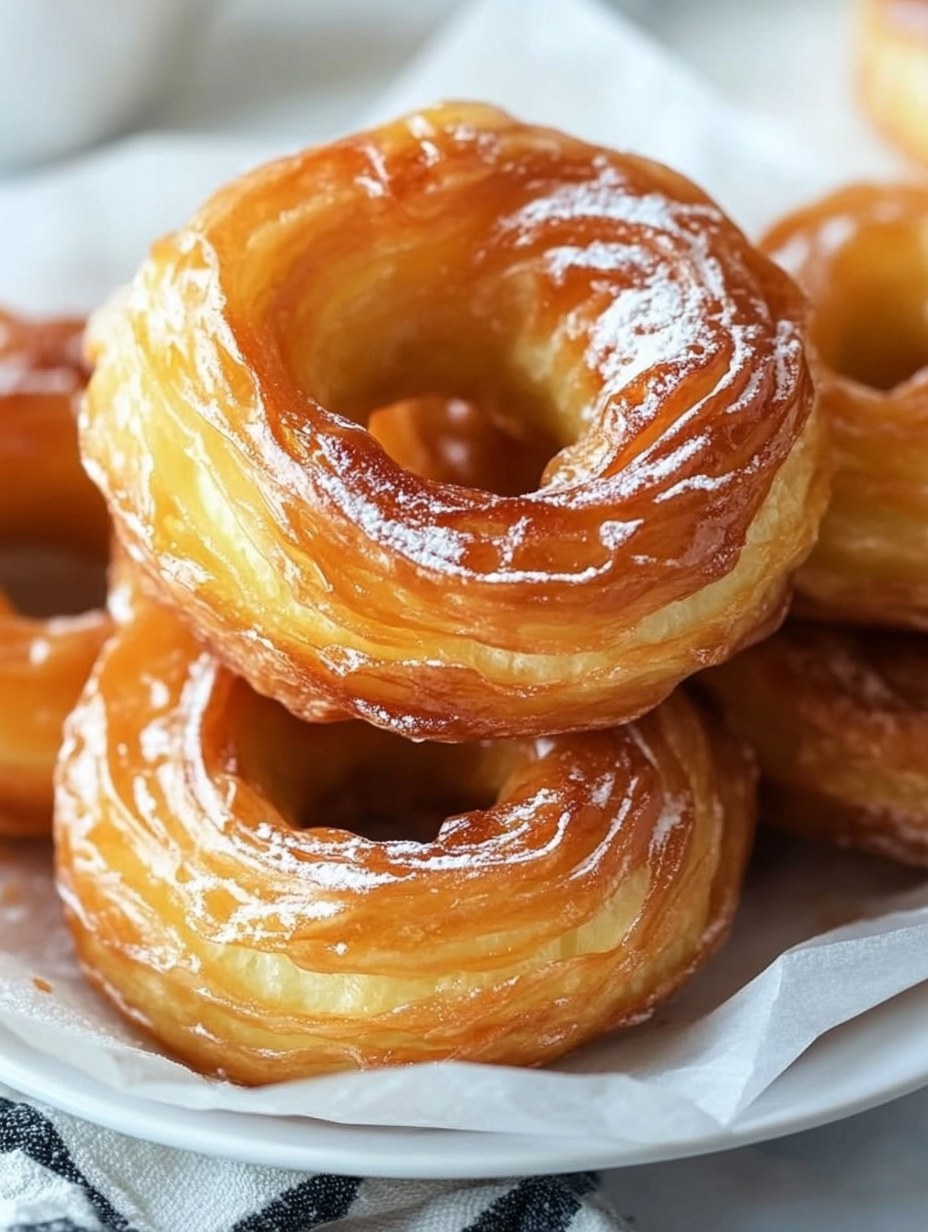
French Crullers are ring-shaped donuts made from choux pastry rather than yeast or cake batter. This gives them their signature light, airy interior and crisp exterior. They’re usually finished with a thin glaze that complements, rather than overwhelms, their delicate flavor.
Think of them like balloons: light, hollow, and surprisingly satisfying.
The Origin of French Crullers
Despite the name, French Crullers have strong roots in both French pastry traditions and American donut culture. The word “cruller” comes from a Dutch term meaning “to curl.” Over time, French-style choux pastry met American frying techniques, and the French Cruller was born.
The result? A donut that feels elegant yet comforting.
Why This Recipe Works
This French Crullers recipe works because it sticks to fundamentals:
Proper choux pastry technique
High-temperature frying for lift
A simple glaze that enhances texture
There’s no overthinking here. Just solid technique and patience—like letting bread rise or waiting for popcorn to pop.
Ingredients Breakdown
Below are the exact same ingredients, unchanged, just explained for clarity.
For the Dough
1 cup water – Creates steam for that airy interior
6 tablespoons unsalted butter – Adds richness and structure
2 teaspoons sugar – Light sweetness and browning
1/4 teaspoon salt – Balances flavor
1 cup all-purpose flour – Forms the dough base
3 large eggs – Essential for structure and lift
1 egg white – Adds extra lightness
Vegetable oil, for frying – Neutral and ideal for high heat
For the Glaze
1/2 cup powdered sugar – Smooth sweetness
1–2 tablespoons milk – Adjusts consistency
1/2 teaspoon vanilla extract – Gentle flavor boost
Preparation Time, Cook Time, and Servings
Preparation Time: 20 minutes
Cook Time: 15 minutes
Total Time: 35 minutes
Servings: 8–10 French Crullers
Essential Tools You’ll Need
Medium saucepan
Wooden spoon or spatula
Mixing bowl
Piping bag with large star tip
Deep fryer or heavy pot
Thermometer (recommended)
Wire rack
Tongs
These tools are like teammates—each plays a role in getting the perfect result.
Step-by-Step Directions
Below are the exact instructions, unchanged, as requested:
Directions
In a medium saucepan, combine water, butter, sugar, and salt. Bring to a boil over medium heat. Reduce heat to low, add flour all at once, and stir vigorously until the mixture forms a ball and pulls away from the sides of the pan, about 1 minute.
Remove from heat and let cool for 5 minutes. Beat in eggs and egg white, one at a time, until the dough is smooth and glossy.
Heat vegetable oil in a deep fryer or large pot to 370°F (187°C).
Transfer the dough to a piping bag fitted with a large star tip. Pipe rings of dough onto squares of parchment paper.
Carefully lower the dough rings into the hot oil, parchment paper side up. The parchment paper will detach as they begin to fry; remove it with tongs. Fry the crullers until golden brown, about 2 minutes per side. Transfer to a wire rack to drain.
For the glaze: Whisk together powdered sugar, milk, and vanilla extract until smooth. Dip the top of each cruller into the glaze, then return to the wire rack to let the glaze set.
Serve the crullers fresh for the best taste and texture.
Enjoy!
Frying Tips for Perfect Texture
Keep oil at 370°F—too low and they absorb oil
Fry in small batches
Don’t rush flipping
Frying French Crullers is like floating a paper boat—you want calm, steady conditions.
The Glaze: Simple but Powerful
This glaze is intentionally light. It adds sweetness without masking the delicate flavor of the dough. A thick glaze would be like shouting in a quiet room—unnecessary.
Texture, Taste, and Appearance
Texture: Crisp outside, airy inside
Taste: Lightly sweet, buttery, vanilla-kissed
Appearance: Golden rings with elegant ridges
They look fancy, but they’re secretly approachable.
Common Mistakes to Avoid
Adding eggs while dough is too hot
Frying at the wrong temperature
Skipping parchment paper
Small mistakes can deflate your crullers—literally.
Serving Suggestions
With coffee or espresso
Light dusting of powdered sugar
Fresh fruit on the side
French Crullers shine brightest when kept simple.
Storage and Freshness Tips
French Crullers are best the same day. If needed:
Store at room temperature for up to 8 hours
Avoid refrigeration (kills texture)
They’re like fireworks—best enjoyed fresh.
French Crullers vs Regular Donuts
| Feature | French Crullers | Regular Donuts |
|---|---|---|
| Dough | Choux pastry | Yeast or cake |
| Texture | Light & airy | Dense or fluffy |
| Flavor | Subtle | Rich or sweet |
Why Homemade French Crullers Are Worth It
Homemade French Crullers taste fresher, lighter, and more delicate than store-bought versions. Plus, making them yourself feels like mastering a small culinary secret.
Conclusion
French Crullers are proof that elegance doesn’t need to be complicated. With simple ingredients, thoughtful technique, and a little patience, you can create donuts that feel special every time. If regular donuts are a cozy blanket, French Crullers are a warm breeze on a spring morning—light, comforting, and unforgettable.
FAQs
1. Why are French Crullers so light?
Because they’re made with choux pastry, which creates steam and air pockets during frying.
2. Can I bake French Crullers instead of frying?
Baking is possible, but frying gives the classic texture and flavor.
3. Why did my French Crullers collapse?
Oil temperature was likely too low or eggs were added incorrectly.
4. Are French Crullers sweet without glaze?
They’re mildly sweet, but the glaze completes the flavor.
5. How fresh should French Crullers be served?
Ideally within a few hours for the best texture and taste.