
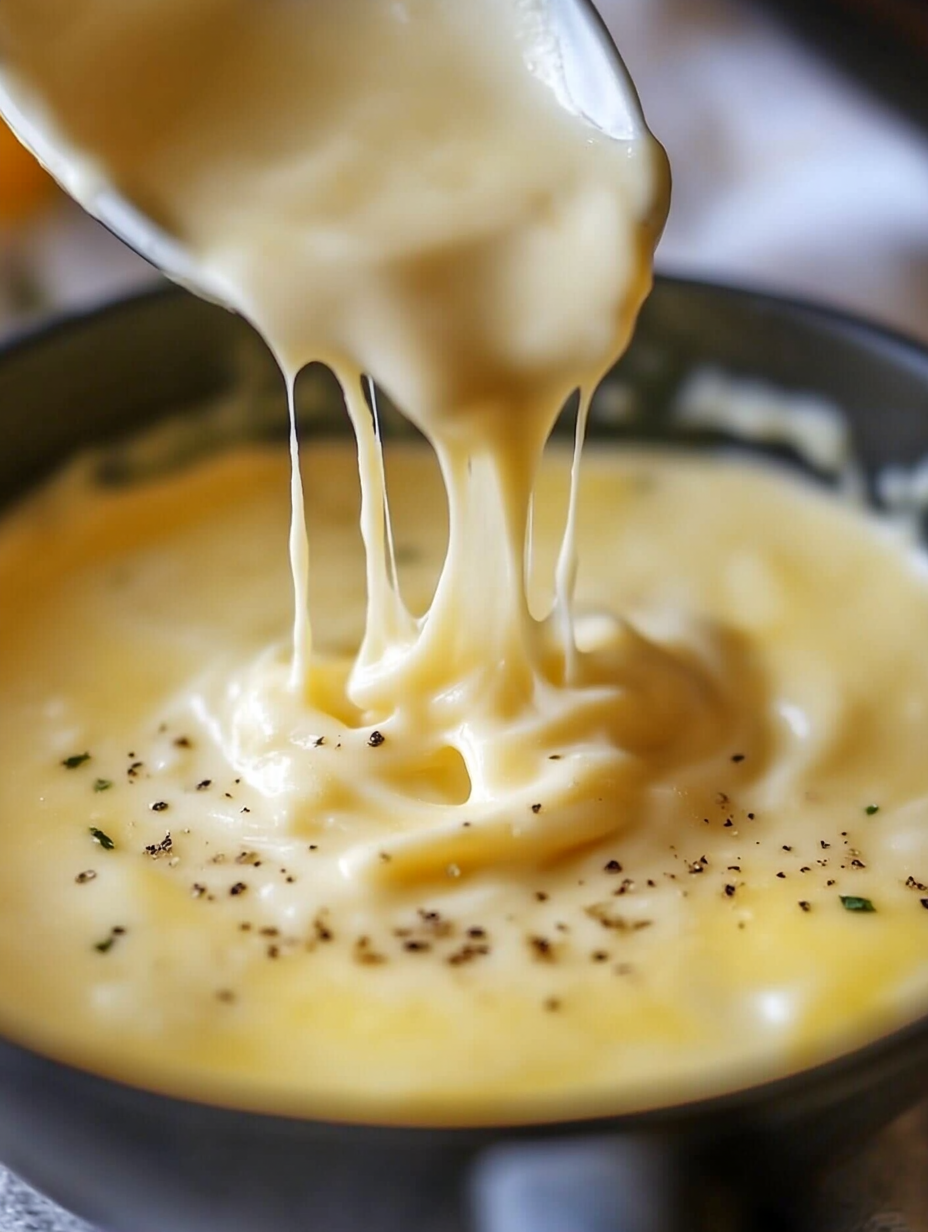
There’s something magical about Homemade Cheese Sauce. It turns plain vegetables into comfort food, transforms pasta into pure indulgence, and makes even a simple bowl of chips feel like a celebration. Have you ever poured warm cheese sauce over broccoli and watched everyone suddenly become a vegetable lover? That’s the power we’re talking about.
The best part? You don’t need fancy ingredients or chef-level skills. With a handful of kitchen staples and about 10 minutes, you can create a smooth, velvety Homemade Cheese Sauce that tastes better than anything from a jar. Think of it as liquid gold—rich, creamy, and capable of making almost anything taste better.
Let’s dive in and make the most delicious Homemade Cheese Sauce together.
Table of Contents
| Sr# | Headings |
|---|---|
| 1 | Why Homemade Cheese Sauce Is Better |
| 2 | Ingredients You’ll Need |
| 3 | Preparation, Cook Time & Servings |
| 4 | Step-by-Step Directions |
| 5 | What Is a Roux and Why It Matters |
| 6 | Choosing the Best Cheese |
| 7 | How to Avoid Lumps |
| 8 | Flavor Variations |
| 9 | Ways to Use Homemade Cheese Sauce |
| 10 | How to Adjust Thickness |
| 11 | Storage and Reheating Tips |
| 12 | Common Mistakes to Avoid |
| 13 | Nutritional Overview |
| 14 | Why This Recipe Works Every Time |
| 15 | Final Thoughts |
1. Why Homemade Cheese Sauce Is Better
Let’s be honest—store-bought cheese sauce just doesn’t compare. It often tastes processed, overly salty, or artificial. When you make Homemade Cheese Sauce, you control the flavor, texture, and ingredients.
You know exactly what’s going into your sauce. No preservatives. No mystery additives. Just butter, flour, milk, cheese, and simple seasoning. It’s comfort food in its purest form.
Plus, it’s customizable. Want it sharper? Add extra cheddar. Prefer it mild? Use Monterey Jack. It’s your sauce, your rules.
2. Ingredients You’ll Need
Here are the exact ingredients for this Homemade Cheese Sauce recipe:
2 tablespoons unsalted butter
2 tablespoons all-purpose flour
1 cup whole milk
1 1/2 cups shredded cheese (cheddar, Monterey Jack, or a mix)
1/4 teaspoon garlic powder (optional)
Salt and black pepper to taste
That’s it. Six simple ingredients that come together to create creamy perfection.
3. Preparation, Cook Time & Servings
Preparation Time: 5 minutes
Cook Time: 5–7 minutes
Total Time: 10–12 minutes
Servings: Approximately 4 servings
In less time than it takes to order takeout, you’ll have a rich and silky Homemade Cheese Sauce ready to enjoy.
4. Step-by-Step Directions
Follow these exact instructions to make your Homemade Cheese Sauce:
In a saucepan, melt the unsalted butter over medium heat.
Add the all-purpose flour to the melted butter and whisk continuously for about 1-2 minutes to create a roux (a thickening agent).
Gradually pour in the whole milk while whisking constantly to prevent lumps from forming.
Cook the mixture, stirring continuously, until it starts to thicken, about 3-5 minutes.
Reduce the heat to low and add the shredded cheese to the sauce, a little at a time, stirring until the cheese melts and the sauce becomes smooth and creamy.
If using, add the garlic powder for extra flavor. Season with salt and black pepper to taste.
Once the cheese has melted completely and the sauce has reached your desired consistency, remove it from the heat.
Enjoy!
5. What Is a Roux and Why It Matters
If you’ve never made a roux before, don’t worry—it sounds fancier than it is.
A roux is simply butter and flour cooked together. It acts as the foundation of your Homemade Cheese Sauce. Think of it as the glue that holds everything together.
Cooking the flour for 1–2 minutes removes the raw taste and ensures your sauce thickens properly. Skip this step or rush it, and your sauce might end up thin or grainy.
6. Choosing the Best Cheese
Cheese is the star of Homemade Cheese Sauce, so choose wisely.
Cheddar gives you a bold, classic flavor.
Monterey Jack offers a milder, creamier texture.
A mix of both? That’s the best of both worlds.
For best results, shred your cheese from a block. Pre-shredded cheese often contains anti-caking agents that can affect the smoothness of your sauce.
7. How to Avoid Lumps
Nobody wants lumpy cheese sauce. So how do you keep it silky smooth?
Whisk constantly when adding milk.
Add milk gradually, not all at once.
Keep the heat moderate.
Stir cheese in slowly on low heat.
Patience is key. If you rush the process, the sauce can become grainy or separate. Treat it gently, and it’ll reward you.
8. Flavor Variations
Want to level up your Homemade Cheese Sauce? Try these ideas:
Spicy Kick: Add a pinch of cayenne pepper.
Smoky Flavor: Use smoked cheddar.
Herb Twist: Stir in fresh parsley or thyme.
Extra Creamy: Swap part of the milk with a splash of heavy cream.
Even with small tweaks, the base recipe stays the same. It’s versatile and forgiving.
9. Ways to Use Homemade Cheese Sauce
Here’s where things get exciting. Homemade Cheese Sauce is incredibly versatile.
Pour over steamed broccoli or cauliflower
Drizzle on baked potatoes
Stir into macaroni for mac and cheese
Use as a dip for nachos
Spoon over grilled chicken
Add to breakfast sandwiches
It’s like a culinary multitool—always ready to upgrade your meal.
10. How to Adjust Thickness
Too thick? Add a splash of warm milk and stir.
Too thin? Let it simmer a bit longer while stirring.
Because this Homemade Cheese Sauce is made fresh, you can easily control the consistency. That’s the beauty of cooking from scratch.
11. Storage and Reheating Tips
Have leftovers? Lucky you.
Storage:
Store in an airtight container in the refrigerator for up to 3 days.
Reheating:
Reheat gently on the stove over low heat. Add a little milk to restore the creamy texture. Avoid high heat, which can cause separation.
12. Common Mistakes to Avoid
Even simple recipes have pitfalls. Here’s what to watch for:
Cooking on high heat
Adding cheese too quickly
Not whisking the milk thoroughly
Skipping seasoning
Remember, Homemade Cheese Sauce thrives on gentle heat and steady stirring.
13. Nutritional Overview
This sauce is rich and satisfying. While it’s indulgent, it’s also portion-friendly. Since it’s homemade, you can control sodium levels and ingredient quality.
Using whole milk and real cheese provides calcium and protein—making it more wholesome than many processed alternatives.
14. Why This Recipe Works Every Time
This Homemade Cheese Sauce recipe works because it follows classic technique:
Balanced butter-to-flour ratio
Proper milk incorporation
Gradual cheese melting
Controlled heat
It’s simple science combined with comforting flavor. Once you master it, you’ll never need a boxed mix again.
15. Final Thoughts
There’s something deeply satisfying about making your own Homemade Cheese Sauce. It’s quick, reliable, and endlessly adaptable. Whether you’re dressing up vegetables, building the ultimate nachos, or stirring it into pasta, this sauce delivers every time.
Cooking doesn’t have to be complicated to be impressive. Sometimes, a saucepan, a whisk, and a little patience are all you need.
Now that you know how easy it is, what will you pour your Homemade Cheese Sauce over first?
Frequently Asked Questions (FAQs)
1. Can I use low-fat milk instead of whole milk?
Yes, but the sauce may be slightly less creamy. Whole milk gives the richest texture.
2. Why did my cheese sauce turn grainy?
Graininess usually happens when the heat is too high or the cheese is added too quickly. Keep the heat low and stir gently.
3. Can I freeze Homemade Cheese Sauce?
It’s not recommended. Freezing can cause separation and change the texture when reheated.
4. How can I make the sauce thicker?
Let it cook a little longer while stirring, or add a bit more shredded cheese.
5. What cheese melts best for Homemade Cheese Sauce?
Cheddar and Monterey Jack melt beautifully and create a smooth, creamy result.
Enjoy your rich, creamy, and irresistible Homemade Cheese Sauce!